
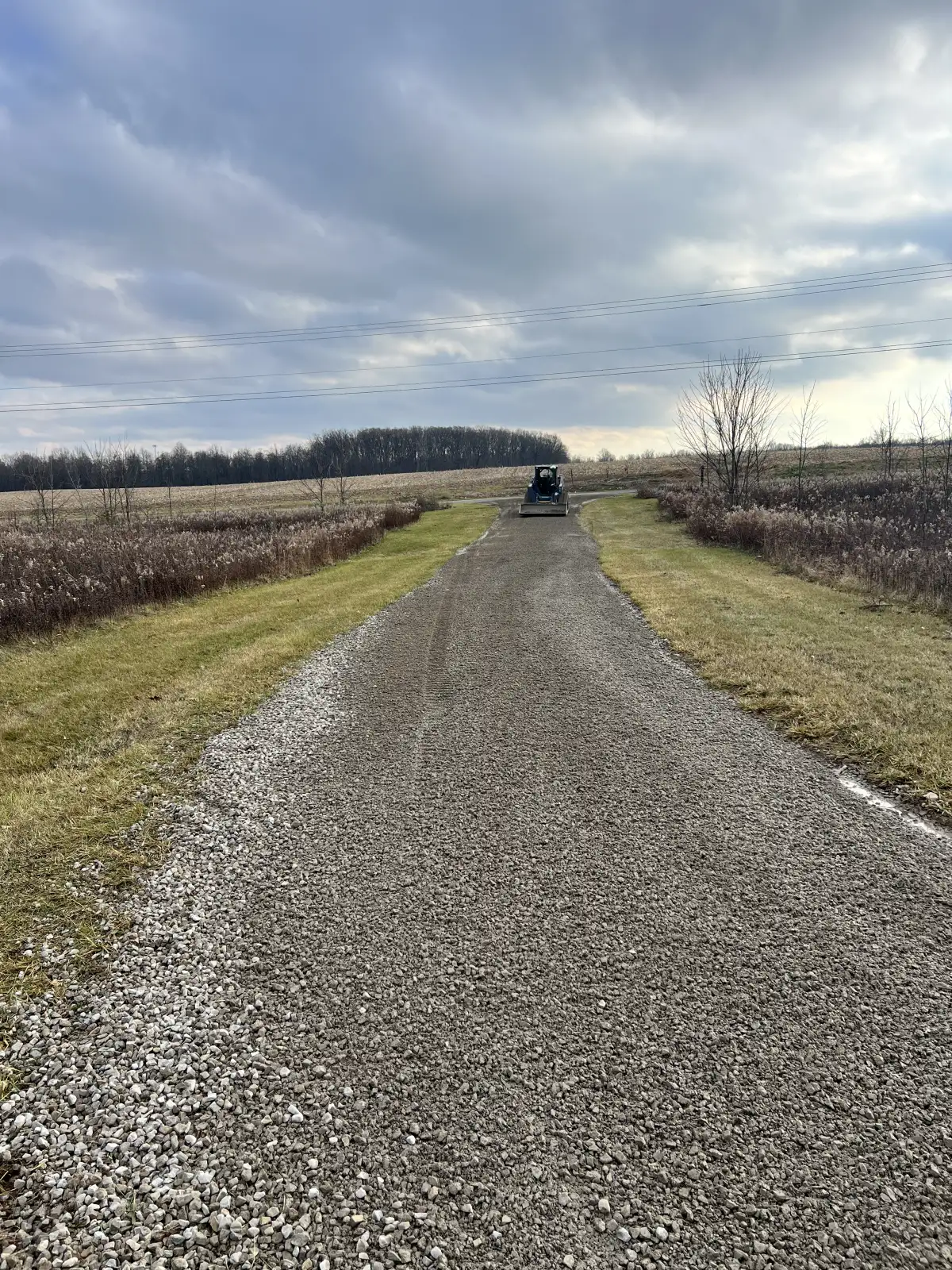
Professional Gravel Driveway Repair and Installation
Gravel driveways are one of the most common driveway types in Union County and rural Central Ohio. They are affordable, drain well, and work on virtually any terrain. But without regular maintenance and proper installation, gravel driveways develop potholes, ruts, washout areas, and uneven surfaces that make them frustrating to drive on and hard to look at. If your driveway has seen better days, Raileys Services can bring it back to like-new condition.
We provide complete gravel driveway services including new installations, full rebuilds of deteriorated driveways, spot repairs and pothole filling, regrading to restore proper surface drainage, and delivery and spreading of new gravel material. Whether your driveway is 50 feet long or a quarter mile of rural access road, no project is too big or too small for our team.
With over 10 years of experience working on properties across Marysville, Plain City, Bellefontaine, and the surrounding rural townships, we understand the unique challenges that Union County's clay soil and flat terrain present for gravel driveways. We build and repair driveways that last, using proper base materials, correct grading techniques, and the right surface gravel for your specific situation.
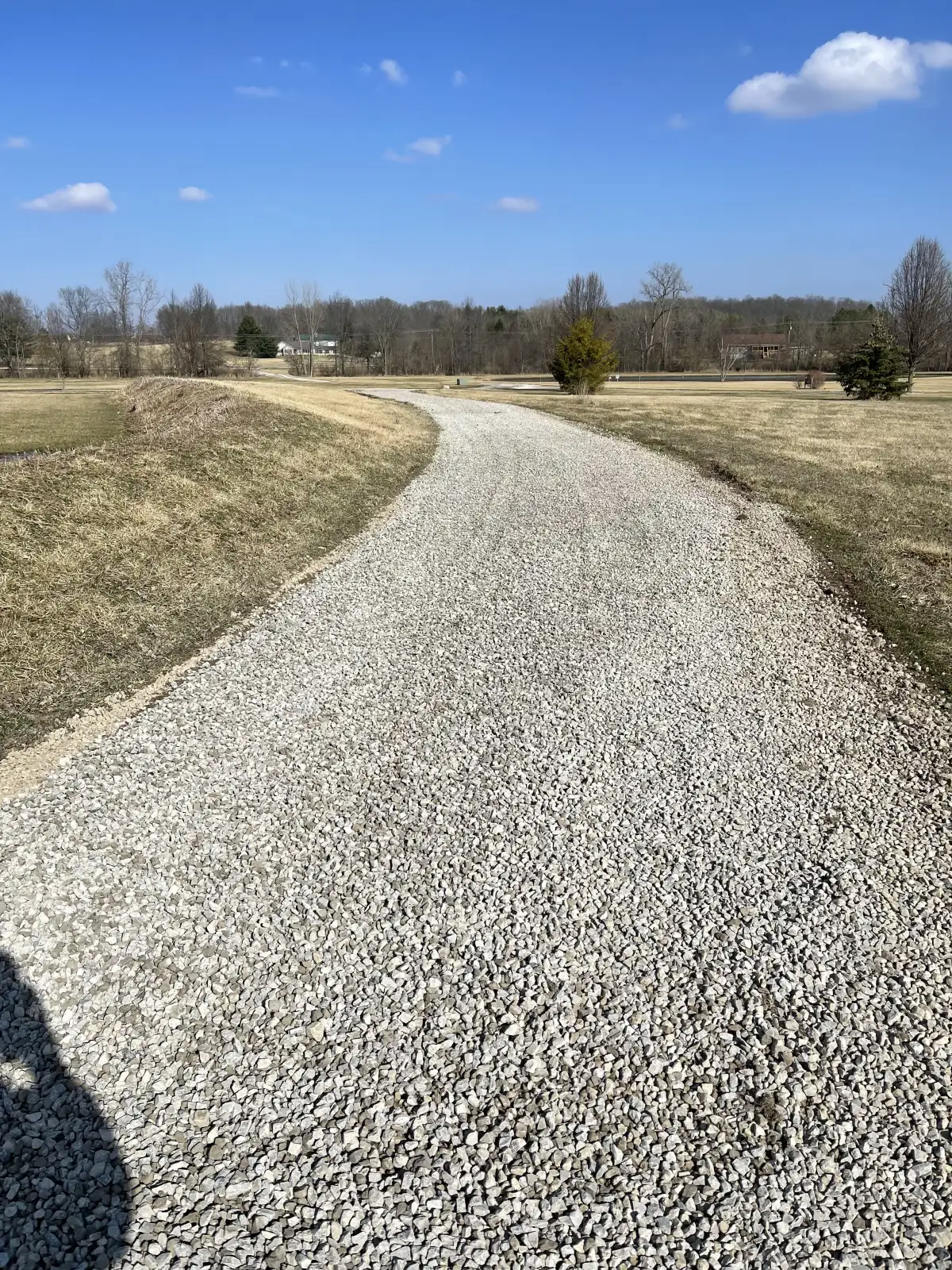
Complete Gravel Driveway Solutions
From brand-new installations to annual maintenance grading, we handle every aspect of gravel driveway care.
New Driveway Installation
A new gravel driveway starts with proper preparation. We begin by marking the driveway footprint based on your needs, then excavate the area to remove topsoil, vegetation, and any unstable material. The subgrade is compacted to create a stable foundation. Next, we install a base layer of large crushed stone, typically #2 or #4 limestone, and compact it thoroughly. This base layer provides the structural foundation that keeps your driveway from sinking and rutting under vehicle weight.
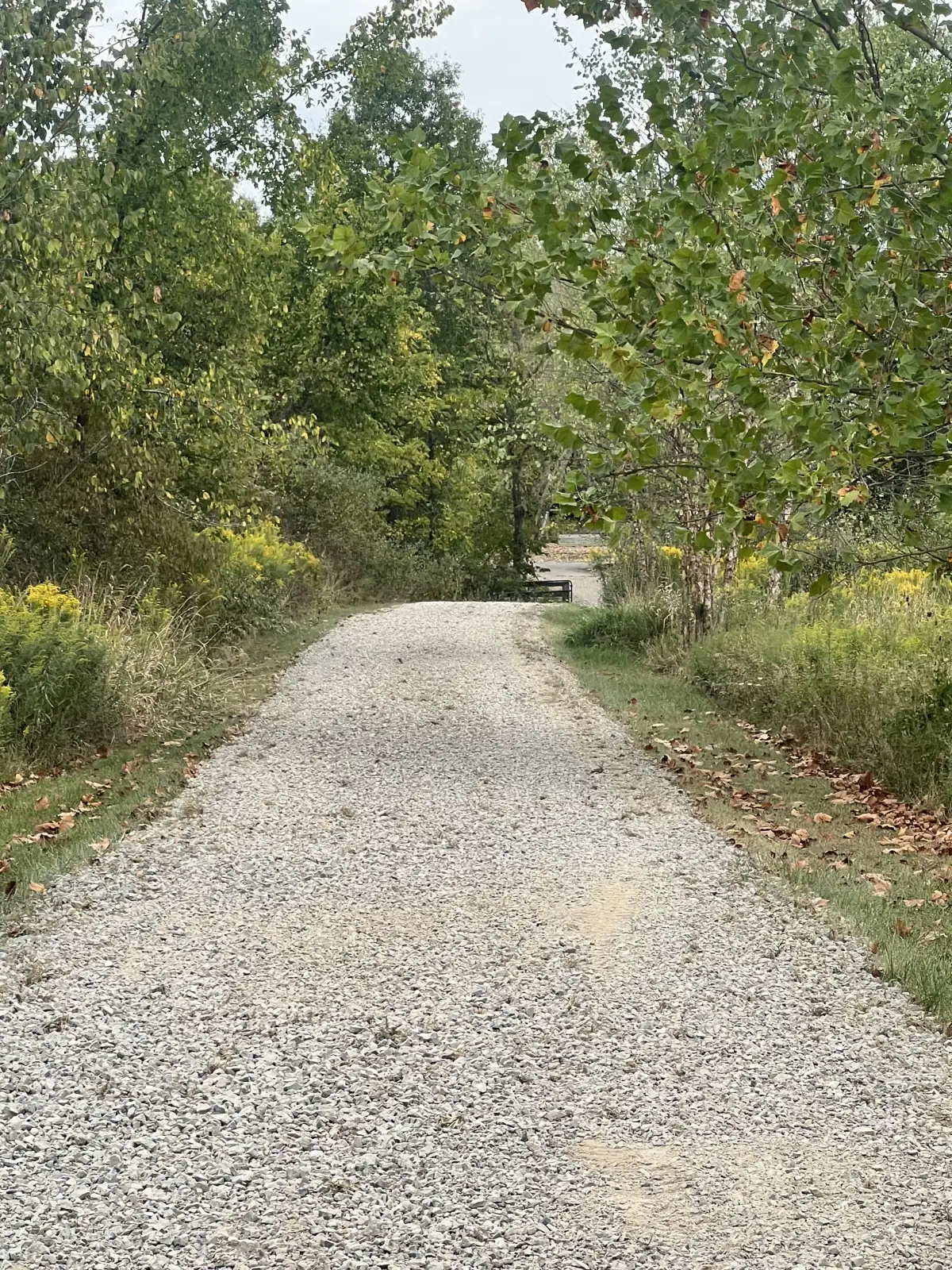
On top of the compacted base, we apply a surface layer of #57 crushed limestone, which is the standard driveway gravel size for Central Ohio. This angular stone locks together when compacted, creating a firm, smooth driving surface that drains well and resists displacement. The finished driveway is crowned slightly in the center so water sheds to both sides rather than pooling on the surface.
For longer driveways or properties with drainage challenges, we install culverts, drainage ditches, and cross-drains as part of the driveway to manage water flow and prevent washouts. These drainage features are especially important in Union County where the flat terrain and clay soil combine to create runoff issues during heavy rain.
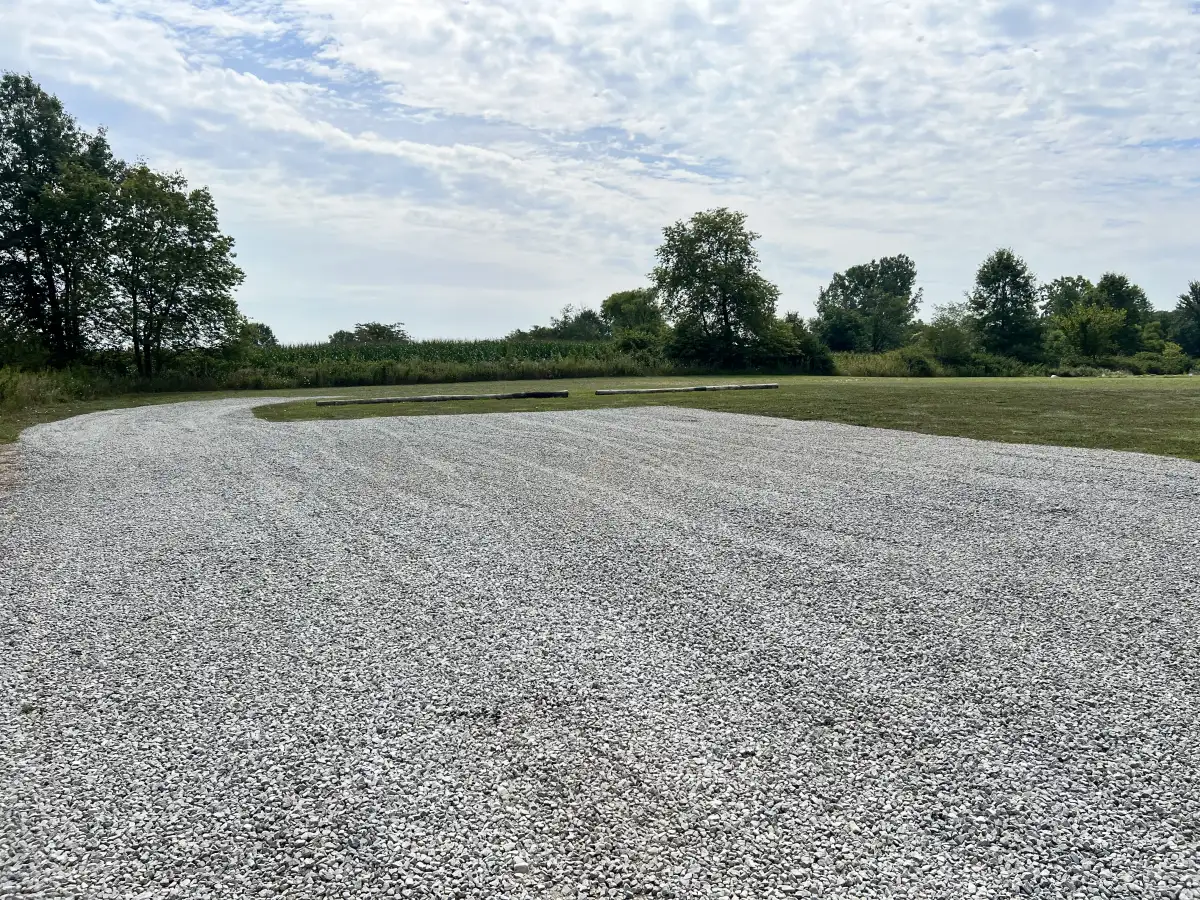
Driveway Repair & Restoration
Most gravel driveway repair jobs fall into one of three categories: pothole repair, regrading, or full restoration. The right approach depends on the current condition of your driveway and how much life is left in the existing base.
Pothole repair is the most common and affordable service. Potholes form when water collects in low spots and softens the base beneath the gravel. We cut out the soft material, fill with compacted base stone, and top with fresh surface gravel. Catching potholes early prevents them from growing into larger, more expensive problems.
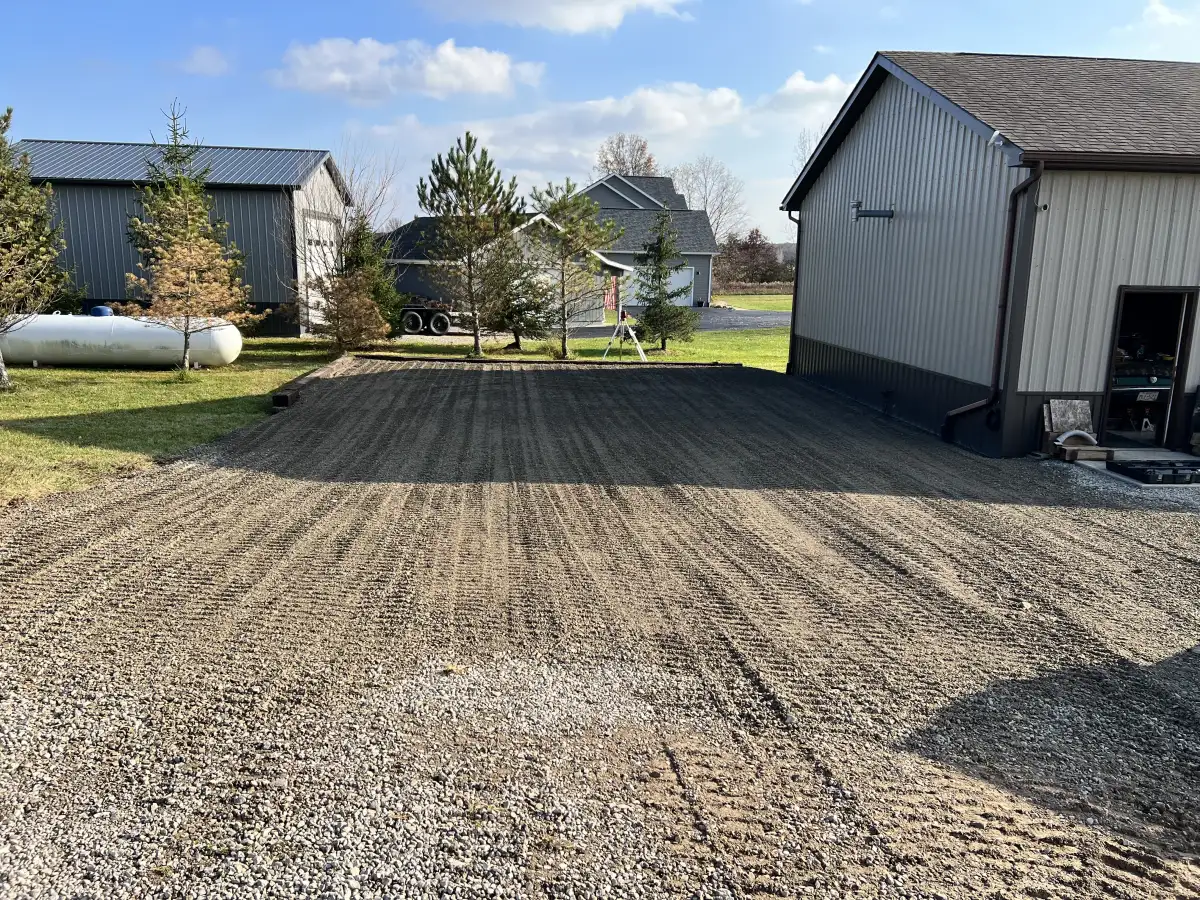
Regrading is the process of reshaping the existing driveway surface to restore proper crown and drainage. Over time, gravel migrates to the edges, the center flattens, and ruts develop in the wheel paths. Our grading equipment pulls the displaced gravel back to where it belongs, reshapes the crown, and fills low spots. This is the single most effective maintenance you can do for a gravel driveway and should be done at least once per year.
Full restoration is needed when the driveway has deteriorated to the point where grading alone cannot fix it. This involves stripping the old surface, repairing or replacing the base where needed, and installing fresh gravel throughout. A restoration is essentially a rebuild of the driving surface on top of the existing base, and it brings a worn-out driveway back to like-new condition.
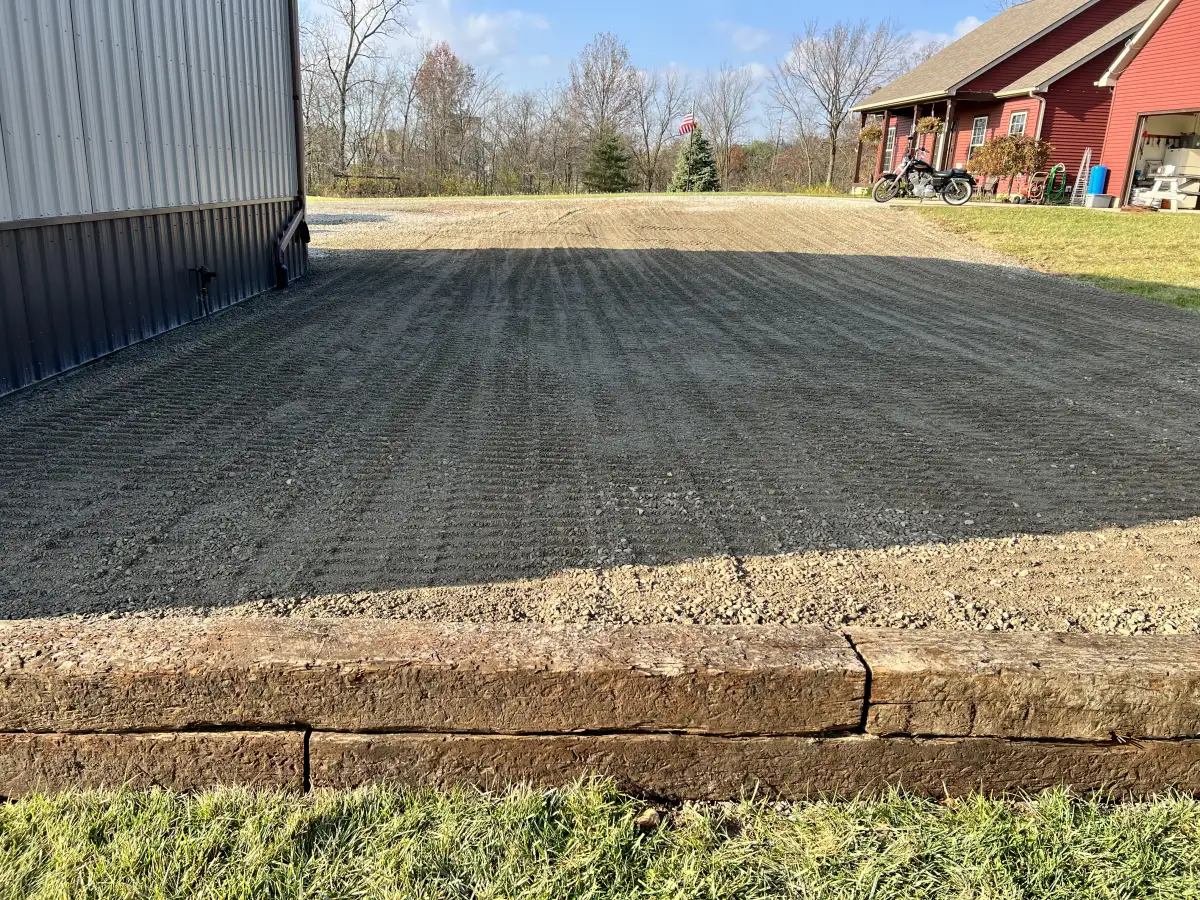
From Ruts to a Firm Driving Surface
Every driveway project is planned around drainage, base strength, stone choice, and the way vehicles use the lane.
Assessment
We visit your property to evaluate the current driveway condition, measure the area, check for drainage issues, and discuss your needs. New installations get a full site survey. Repairs get a condition report with our recommended approach. This visit and the estimate are free.
Preparation
For new driveways, we excavate and prepare the subgrade. For repairs, we remove deteriorated material and address any base failures. Drainage features like culverts and ditches are installed during this phase to ensure water management is handled before the gravel goes down.
Base Installation & Compaction
The base layer of large crushed stone is installed in lifts and compacted with heavy equipment. This is the most important step for long-term driveway performance. A well-compacted base prevents sinking, rutting, and pothole formation. We do not skip or shortcut this step.
Surface Gravel & Finishing
The surface layer of #57 crushed limestone is applied, graded to the correct crown, and compacted. The finished surface is smooth, firm, and properly crowned for drainage. We clean up the edges and any material that has spilled onto the lawn or surrounding area.
Final Inspection
We walk the finished driveway with you to make sure everything meets your expectations. Our job isn't finished until you are completely satisfied with the result. We also provide maintenance recommendations to help your new driveway last as long as possible.
Types of Driveway Gravel for Central Ohio
Choosing the right gravel is important for driveway performance and longevity. Not all gravel works well for driveways, and using the wrong type leads to problems. Here is what we recommend based on years of experience with Union County soil and climate conditions.
#57 Crushed Limestone is our standard recommendation for driveway surface layers. These angular stones are approximately three-quarters of an inch in size and interlock when compacted to create a firm, stable driving surface. Crushed limestone is locally sourced, affordable, and handles Ohio's freeze-thaw cycles well. It also provides excellent drainage.
#2 and #4 Crushed Stone are used for the base layer beneath the surface gravel. These larger stones, ranging from 2 to 4 inches, create a stable structural foundation that distributes vehicle weight and prevents the driveway from sinking into the subgrade. The base layer is what separates a driveway that lasts decades from one that falls apart in a few years.
Pea gravel is sometimes requested for its appearance, but we generally do not recommend it for driveways. Its round, smooth shape means it does not compact or interlock, so it shifts and spreads under vehicle tires. Pea gravel works well for walkways, patios, and decorative areas, but it creates a poor driving surface.
River rock has the same issue as pea gravel: the rounded stones do not lock together. It is a decorative material, not a structural one. We can use it for driveway borders or decorative elements alongside a properly built gravel driveway.
Benefits of Gravel for Union County Properties
Gravel driveways are the practical choice for most rural and semi-rural properties in Union County and the surrounding area. Here is why they remain the most popular driveway surface in our region.
- Affordable — Gravel driveways cost a fraction of asphalt or concrete, making them ideal for long rural driveways where paved options would be prohibitively expensive.
- Excellent drainage — Water passes through gravel rather than running off the surface, reducing erosion and eliminating standing water issues common on clay soil.
- Easy to repair — Potholes and damage on gravel driveways are quick and affordable to fix. Asphalt and concrete repairs are far more expensive and complicated.
- Works on any length — Whether your driveway is 50 feet or a quarter mile, gravel is practical and cost-effective at any distance.
- Handles freeze-thaw — Unlike concrete that cracks and asphalt that heaves, gravel flexes with Ohio's freeze-thaw cycles without structural damage.
- Long-lasting — A properly installed gravel driveway with annual maintenance can last 25 years or more.
Keep Your Gravel Driveway in Top Condition
Regular maintenance extends the life of your gravel driveway and keeps it looking and performing its best year-round.
Annual Grading
Schedule professional grading at least once per year, ideally in spring after the freeze-thaw cycle ends. Grading restores the crown, fills ruts, and redistributes gravel that has migrated to the edges. This single maintenance step prevents most common driveway problems.
Pothole Repair
Fill potholes as soon as they appear rather than waiting for them to grow. Small potholes are quick and cheap to fix. Large potholes require more material, more labor, and may indicate a failing base beneath the surface that needs more extensive repair.
Surface Replenishment
Every 2 to 5 years, depending on traffic volume and weather, your driveway will need a fresh layer of surface gravel. Signs that it is time include the base layer becoming visible, excessive dust during dry weather, and thinning of the driving surface in high-traffic areas.
We offer annual driveway maintenance plans that include spring grading, pothole repair, and surface assessment. Contact us for details.
Beyond the Driveway
Driveway work often connects to other property improvements. Let us handle the full scope.
Grading & Drainage
If your driveway washout is caused by poor yard drainage, our grading and drainage service addresses the root cause so your driveway repair lasts.
Landscape Installation
Dress up the areas around your new driveway with professional landscape installation including plantings, beds, and decorative borders.
Hardscaping
Combine your driveway project with hardscaping elements like retaining walls at the driveway entrance, paver aprons, or stone-bordered parking pads.
Driveway Repair Routes Around Marysville
Get Your Driveway Back in Shape
Whether you need a new gravel driveway or your existing one needs repair, we will give you an honest assessment and a fair price. No project is too big or too small.