
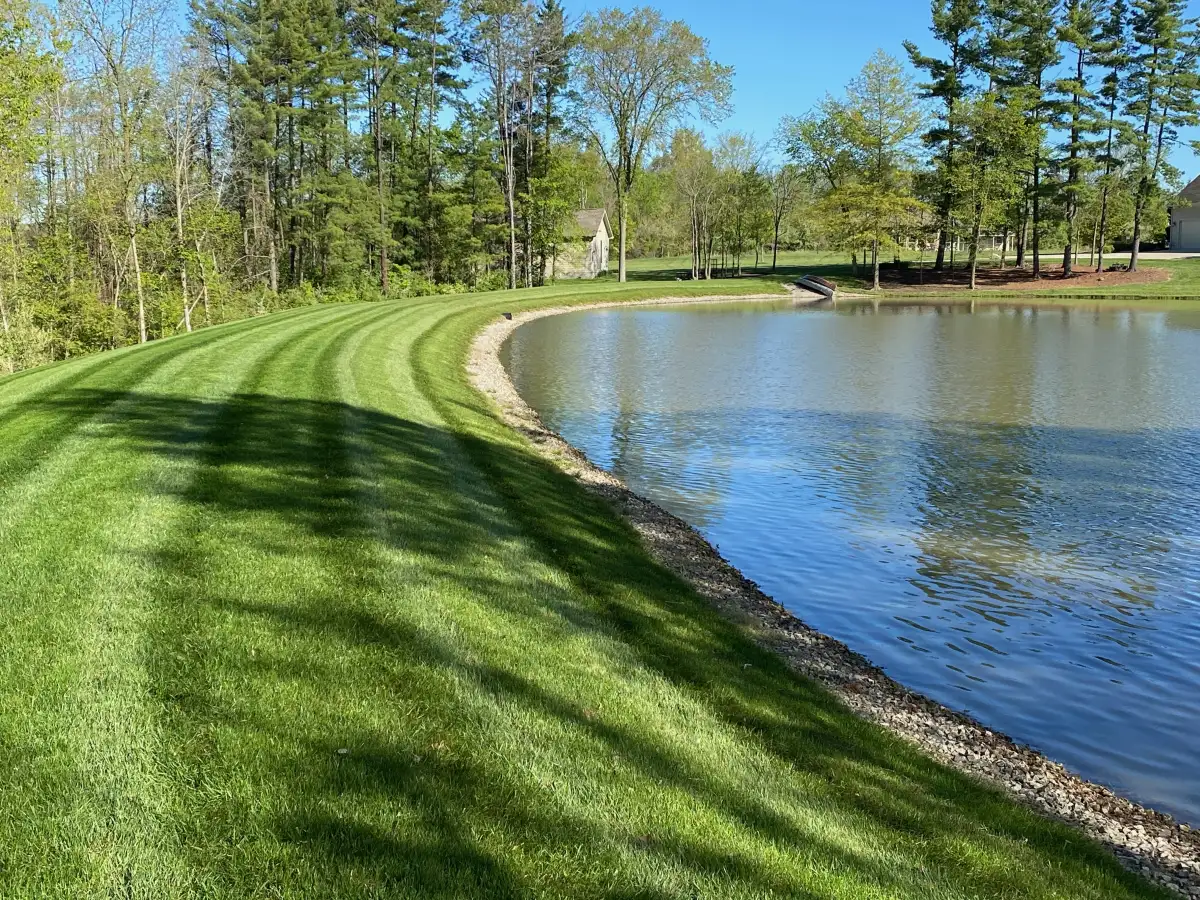
In Central Ohio, most homeowners stop cutting grass in late October to mid-November, depending on the weather each year. Grass growth slows significantly once daytime temperatures consistently stay below 50 degrees Fahrenheit, and at that point your lawn enters dormancy for the winter. However, how you handle those final weeks of the mowing season has a big impact on how your lawn comes back in the spring.
As a lawn care company based in Marysville, Ohio, we mow hundreds of properties each week during the growing season. Here is what we have learned over 10 years of managing lawns in Union County and the surrounding area.
When Does Grass Stop Growing in Ohio?
Ohio falls within USDA Hardiness Zones 5b to 6a, which means our growing season for cool-season grasses typically runs from mid-April through mid-November. The exact dates shift each year depending on weather patterns, but here is a general timeline for Central Ohio:
- April: Grass begins actively growing. First mow usually happens in mid to late April.
- May - September: Peak growing season. Weekly mowing is ideal.
- October: Growth slows noticeably. Switch to bi-weekly mowing by mid-October for most lawns.
- Late October - Mid-November: Final mow window. Growth stops when soil temperatures drop below 50 degrees.
- November - March: Dormancy. No mowing needed.
Soil temperature is actually a better indicator than air temperature. Grass roots continue to grow even after the tops stop, and soil cools down more slowly than the air. You can check local soil temperatures through the Ohio State University Extension weather stations.
What Height Should the Last Mow Be?
For the final mow of the season, we recommend cutting your lawn slightly shorter than your normal summer height. During the regular season, we keep most Central Ohio lawns at 3 to 3.5 inches. For the last cut, we bring it down to about 2.5 inches.
Here is why: taller grass going into winter is more susceptible to snow mold, a common fungal disease in Ohio. Snow mold develops under prolonged snow cover on matted, long grass. Cutting slightly shorter reduces the leaf surface where the fungus takes hold. However, do not scalp the lawn. Cutting too short (below 2 inches) exposes the crown of the plant and weakens the grass heading into winter.
| Grass Type | Summer Height | Final Cut Height |
|---|---|---|
| Kentucky Bluegrass | 2.5 - 3.5 inches | 2 - 2.5 inches |
| Tall Fescue | 3 - 4 inches | 2.5 - 3 inches |
| Perennial Ryegrass | 2.5 - 3.5 inches | 2 - 2.5 inches |
If you are not sure what type of grass you have, chances are it is a blend. Most lawns in Marysville and the surrounding area use a mix of Kentucky Bluegrass and Tall Fescue, which is well-suited to our climate. When in doubt, a final cut around 2.5 inches works well for most Ohio lawns.
Cool-Season Grasses in Central Ohio
All of the common lawn grasses in our area are cool-season varieties, meaning they thrive in the 60-75 degree temperature range and go dormant during both the heat of summer and the cold of winter. The three most common types you will find in Central Ohio are:
- Kentucky Bluegrass: The most popular lawn grass in Ohio. It has a fine texture, rich green color, and excellent cold hardiness. It spreads through rhizomes, which helps it fill in bare spots. It does require consistent moisture and does not tolerate drought as well as fescue.
- Tall Fescue: A tough, deep-rooted grass that handles heat, drought, and heavy foot traffic better than bluegrass. It is a bunch-type grass (does not spread on its own), so bare spots need overseeding. Very common in Central Ohio lawns, especially in newer developments.
- Perennial Ryegrass: Often included in seed blends because it germinates quickly and fills in fast. It is less cold-hardy than bluegrass or fescue and is typically used as a complement rather than a standalone lawn grass in Ohio.
Fall Lawn Care Checklist for Ohio
The weeks between your last regular mowing and the first frost are some of the most important for your lawn's health. Here is what we recommend for Central Ohio properties:
- Aerate the lawn (September - early October): Core aeration relieves soil compaction and allows air, water, and nutrients to reach the root zone. Ohio's heavy clay soils benefit from annual aeration. The best window is early fall when the grass is still actively growing and can recover quickly.
- Overseed thin areas (September): Fall is the best time to overseed in Ohio. Cooler temperatures and reliable rainfall give new seed the best chance of establishing before winter. Pair overseeding with aeration for the best results.
- Apply fall fertilizer (October - early November): A late-fall fertilizer application (often called a "winterizer") feeds the root system through late autumn and helps the lawn green up faster in spring. Use a high-potassium formula to improve cold hardiness.
- Remove leaves regularly (October - November): A thick layer of fallen leaves left on the lawn blocks sunlight and traps moisture, which creates ideal conditions for fungal disease. Mulch-mow light leaf cover or rake and remove heavy accumulations.
- Final mow at a lower height (Late October - mid-November): As discussed above, lower the mowing height for the last one or two cuts to reduce snow mold risk.
- Clean and store equipment: Drain fuel from your mower or add stabilizer. Sharpen blades now so everything is ready for spring.
What Happens After the Last Mow?
Once your lawn goes dormant, the focus shifts from mowing to protection. Avoid heavy foot traffic on frozen grass, as the frozen blades can snap and damage the crown of the plant. If you have a snow removal contract, make sure your plow provider knows where your lawn edges are to avoid tearing up turf.
For many of our clients, the transition from lawn care to snow removal is seamless. We handle both, which means your property stays maintained year-round with a single provider.
When to Start Mowing Again in Spring
In Central Ohio, the first mow of the new season typically falls in mid to late April. Watch for grass that has reached 3.5 to 4 inches in height, which is your signal that growth has resumed. Do not mow too early when the ground is still soft and saturated from spring rains, as you will leave ruts and compact the soil.
For the first spring mow, set your mower at your normal summer height (3 to 3.5 inches for most Ohio lawns). Resist the urge to scalp the lawn to clean it up. A gentle first cut is better for the grass as it comes out of dormancy.
Need Help With Your Lawn This Season?
Whether you need weekly lawn mowing, fall cleanup, aeration, or year-round property maintenance, Raileys Services has you covered. We serve Marysville, Dublin, Powell, Plain City, Bellefontaine, and the surrounding Central Ohio area.
Call us at (937) 243-9488 or request a free estimate online.